Correspondence · Private archive
1997Mega fax to Arista
25 June 1997. Describes his lyric work on ‘Flower’ and his earlier work on the first album. The retained page does not name ‘The Sign’; the book says so.
A memoir of a song · Wedgwood Press
Ace of Base, Cheiron, and the Ending I Wrote
In August 1993, during a vocal session at Cheiron Studios in Stockholm, M. Maurice Hawkesworth wrote the closing lyrical and melodic turn of Ace of Base’s ‘The Sign’, the song that went on to become Billboard’s number one single of 1994. His name was never on it. This is his account.
Also on Amazon.se · Kindle · Svensk utgåva
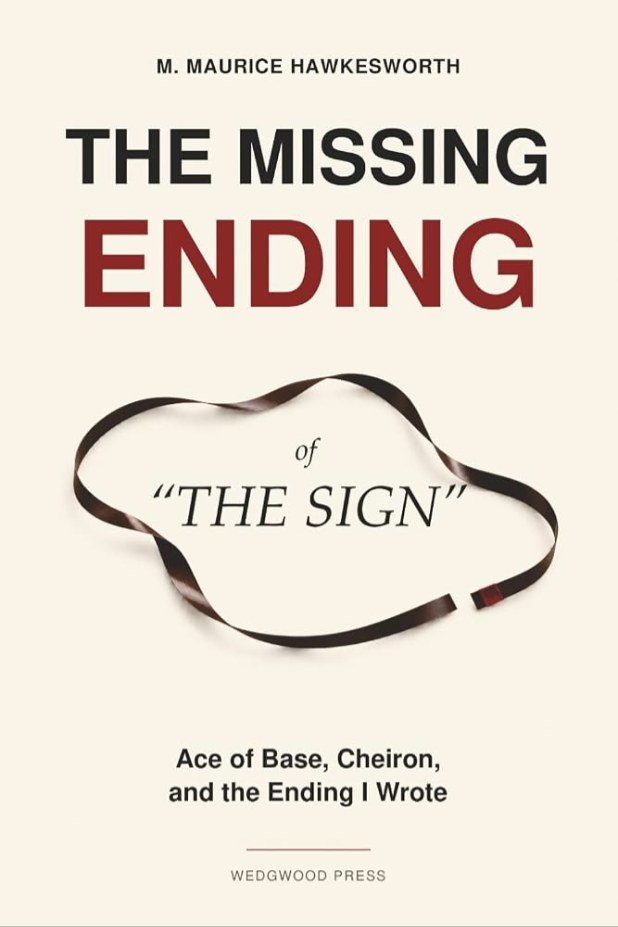
Available in paperback
The account
Pop songs are rarely written by one person in one sitting. They are finished in rooms full of people, under deadline, with a singer waiting at the microphone. Credits are settled later, and sometimes they are settled without everyone who was in the room.
Maurice Hawkesworth joined Mega Records in Copenhagen in June 1992, months before Ace of Base broke. That autumn Jonas Berggren played him an early ‘The Sign’ on a five-string guitar in a Copenhagen hotel lobby. In August 1993, at Cheiron Studios in Stockholm, during the vocal session for the American release, he wrote and sang the song’s closing words and melody. The title, the hook and the central idea are Jonas Berggren’s. The ending, he says, was his.
The book sets out what happened, who was there, and the documents that survive. It credits Jenny Berggren’s own melodic lift in the final chorus, and it is arranged so that anyone with a professional interest can follow the evidence and test it.
“The one-name answer has followed the record around the world; the studio was full of people making decisions.”From the book
What the book says
What the book does not say
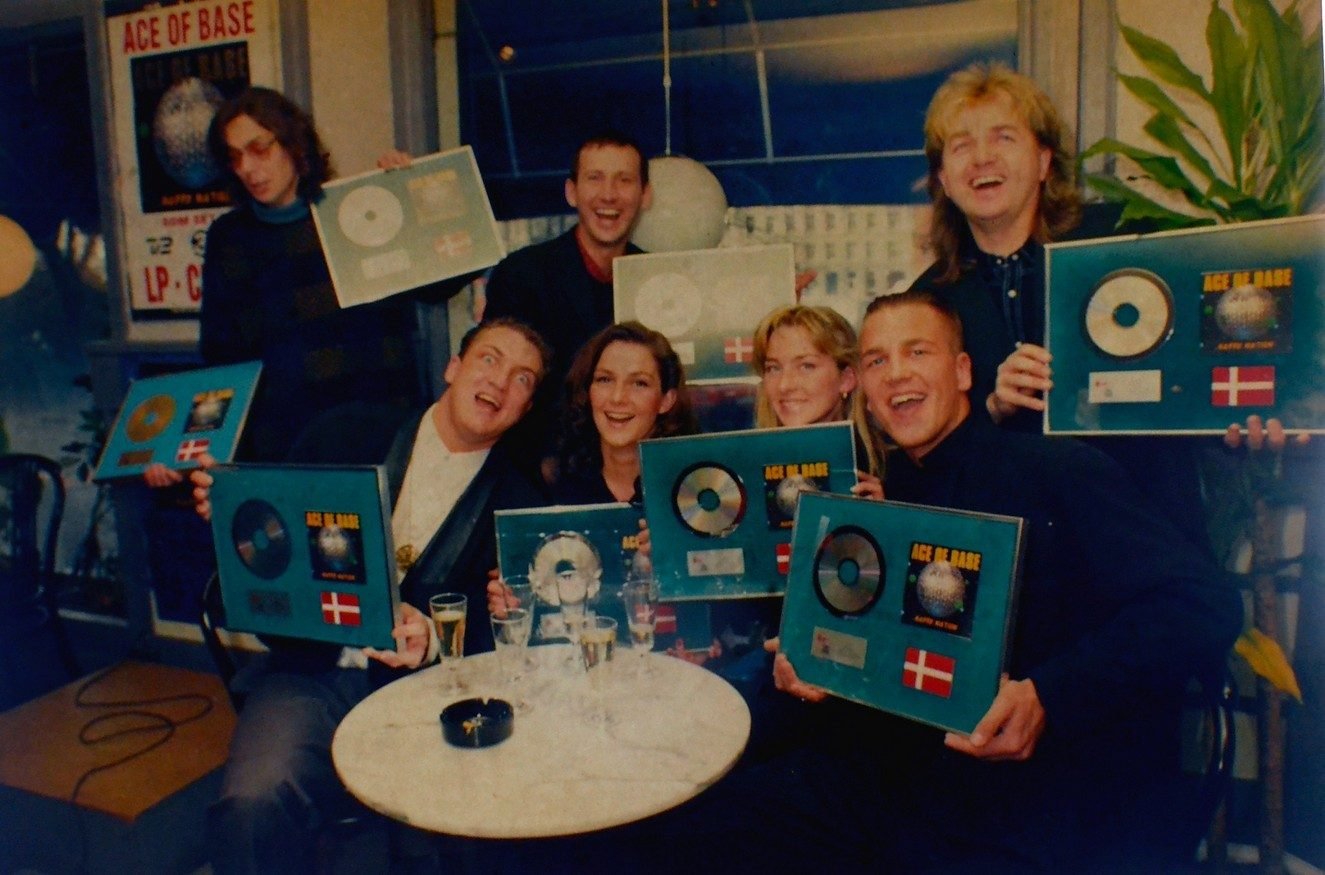
From the book
The opening pages
The answer occupies one line on the official Ace of Base website. Under “Writer” for “The Sign,” it says Jonas Berggren. Scroll down and the same page says Jenny Berggren “played around with the chords at the end and composed the harmonies around it.” I went back to the writer field. Still Jonas. Her harmonies might be a vocal arrangement rather than a songwriting share; the page cannot settle that question. It does tell you that the one-name field is a much smaller account of the recording than the story printed below it.
I wrote the closing words and melody at Cheiron. I sang the passage to the people working on the record and wrote it on a page that reached Malin and Jenny at the microphone. Jenny brought something of her own to the vocal, and I want her part told accurately. I want an account large enough to hold what happened. The one-name answer has followed the record around the world; the studio was full of people making decisions. How did we arrive at that neat little box? The story begins before the song, inside a much messier record company.
From Chapter 6
Cheiron Studios, August 1993
I went upstairs to cool the moment and sat in Denniz’s office.
Denniz called me there on the in-house landline. In substance, he said: it has to go in the song.
While I was on the house phone with Denniz, Jonas called my Mega mobile. I told Denniz that Jonas was on the mobile. I told Jonas that I was on the house line with Denniz. It was funny. We were barely fifty metres from one another, in the same studio complex, and had somehow acquired the telecommunications requirements of an international conference.
Jonas asked, “What do you want for it?” We were talking about my share for the passage I had written.
The singers were waiting. We wanted the record finished. I told Jonas we could figure out a cut.
I wish I had taken more care with that sentence.
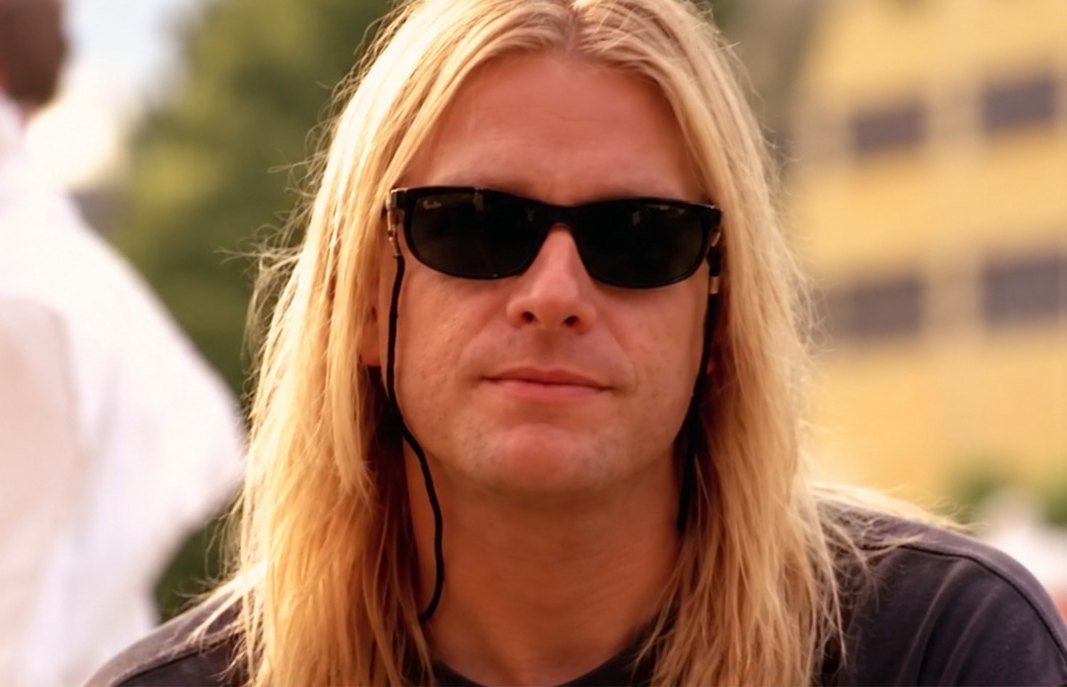
The song
‘The Sign’ was the breakthrough single for Ace of Base, the Swedish group of Jonas Berggren, Linn (Malin) Berggren, Jenny Berggren and Ulf Ekberg. It was recorded at Cheiron Studios in Stockholm, produced by Denniz PoP and Douglas Carr with Jonas Berggren, and released by Mega Records, the Copenhagen label that had signed the band.
The song spent six weeks at number one on the Billboard Hot 100 in 1994 and finished as Billboard’s top single of that year. It also reached number one across Europe, in Canada and in Australia, and gave its name to the band’s first North American album.
Timeline
The book reconstructs the sequence in detail. These are the fixed points, taken from its own timeline.
Claes Cornelius brings Hawkesworth to Mega Records in Copenhagen.
‘All That She Wants’ reaches number one in Denmark. Jonas Berggren plays him ‘The Sign’ on a five-string guitar in the lobby of the Kong Frederik Hotel.
Music & Media names him as Mega’s A&R manager and prints his view of Ace of Base’s international prospects.
He takes the first album to New York and meets Arista.
At Cheiron, during a vocal session for the American release, he writes and sings the closing words and melody of ‘The Sign’.
‘The Sign’ is released by Mega Records in Europe, then by Arista in the US. His name is not in the writing credits.
The song tops the Billboard Hot 100 and becomes Billboard’s number one single of the year. In December he attends the Billboard Music Awards with the band.
Mega faxes Arista about his lyric work on ‘Flower’, referring to his earlier work on the first album.
Wedgwood Press publishes The Missing Ending of ‘The Sign’.
The record
The book is built to be checked. The contemporary trade press is public, and you can read it yourself.
Press · Public archive
1992“Ace Of Base Draws the Reggae Card”, page 11. Names him as Mega’s A&R manager and records his early view of the band’s international potential.
Open the issue →Press · Public archive
1993Page 28. Danish sales, his A&R role and Mega’s international licensing story.
Open the issue →Press · Public archive
1993Page 39, the month of the Cheiron session. Quotes him for Mega on imitation releases threatening the band’s US launch.
Open the issue →Correspondence · Private archive
199725 June 1997. Describes his lyric work on ‘Flower’ and his earlier work on the first album. The retained page does not name ‘The Sign’; the book says so.
Also cited in the book: Music & Media, 31 July 1993, p. 5; Jenny Berggren’s 2020 interview describing the outro and end choirs; and the official Ace of Base page for ‘The Sign’, archived 3 October 2026.
Questions
The song is credited to Jonas Berggren of Ace of Base, who wrote its title, hook and central idea. In The Missing Ending of ‘The Sign’, former Mega Records A&R manager M. Maurice Hawkesworth gives his account of writing the song’s closing words and melody at Cheiron Studios in August 1993, a contribution that was never credited.
Denniz PoP and Douglas Carr, together with Jonas Berggren, at Cheiron Studios in Stockholm.
It came out on 1 November 1993 in Europe on Mega Records and in December 1993 in the US on Arista. It spent six weeks at number one on the Billboard Hot 100 and was Billboard’s top single of 1994.
A pop group from Gothenburg, Sweden: Jonas Berggren, Linn (Malin) Berggren, Jenny Berggren and Ulf Ekberg. Their hits include ‘All That She Wants’, ‘The Sign’, ‘Don’t Turn Around’ and ‘Happy Nation’.
Only that the author wrote the song’s closing words and melody at Cheiron in August 1993, sang them to the people making the record, and was not credited. It does not claim the title, the hook or the song as a whole, and it credits Jenny Berggren’s own melodic lift in the final chorus.
A lyricist, composer and former A&R Creative Manager at Mega Records in Copenhagen, which he joined in June 1992. He lives between Copenhagen and Berlin.
The English paperback is on Amazon.com and Amazon.se (ISBN 978-3-69244-182-5), with a Kindle edition. The Swedish edition, Det saknade slutet på The Sign, is on Amazon.se (ISBN 978-3-69244-183-2). Both are published by Wedgwood Press, Berlin.
På svenska
Boken berättar hur avslutningen på Ace of Base-låten ”The Sign” skrevs under en sånginspelning på Cheiron Studios i Stockholm i augusti 1993, och om krediten som aldrig kom. Låten krediteras Jonas Berggren. Boken gör anspråk enbart på de avslutande raderna.
På dansk
Bogen fortæller, hvordan slutningen på Ace of Base-sangen ”The Sign” blev skrevet under en vokalindspilning i Cheiron Studios i Stockholm i august 1993, og om den kreditering, der aldrig kom. Sangen er krediteret Jonas Berggren. Bogen gør kun krav på de afsluttende linjer.
Witnesses, journalists, counsel
If you were at Cheiron in the summer of 1993, worked with Mega Records at the time, or are looking into this as a journalist or lawyer, I would like to hear from you. Every question will get a full answer.